
A useful proposal begins with a measurable building problem. ‘Install a new intercom’ is not enough; council should define whether it needs better visitor verification, manageable credentials, accessible entry, parkade control, reliable recordings or coordination among several systems.
Use the same checklist for every bidder so an apparently low price cannot hide missing doors, licences, resident setup, other trades or long-term fees.
Direct answer
The short answer
Before approving an intercom, access-control, CCTV, gate, elevator or automatic-door project, compare the complete operating outcome—not only equipment and price. Every proposal should identify exact devices and locations, retained infrastructure, recurring fees, resident transition, privacy controls, outage behaviour, permits and trade responsibilities, exclusions, warranty terms, training, account ownership and final handover documents.
Document the existing property before asking for bids
A proposal is only comparable when every contractor receives the same baseline inventory and desired operating outcome.
| System | Information to collect |
|---|---|
| Intercom | Manufacturer, model, panels, unit count, calling method, faults and administrator access |
| Access control | Controllers, readers, credentials, doors, software, power supplies and ownership |
| CCTV | Cameras, recorder, storage, retention, cable, remote access and failed views |
| Gate and parkade | Operator, remotes, receivers, safety devices, UHF or plate equipment |
| Elevator | Readers, relays, approved floors and elevator-contractor responsibilities |
| Automatic doors | Operator, activation devices, locking sequence and safety sensors |
| Infrastructure | Wiring, network, internet, UPS, panels, pathways and equipment rooms |
Compare proposals line by line
Each bidder should answer these questions in writing. A feature described as ‘capable’ is not included unless the equipment, programming and responsibility appear in the scope.
| Proposal item | Question every bidder should answer |
|---|---|
| Scope | Which exact entrance, door, camera, gate or elevator interface is included? |
| Equipment | Are manufacturers, models, quantities and important specifications stated? |
| Retained equipment | What remains, and how was condition or compatibility determined? |
| Credentials | Which fobs, cards, apps, BLE, NFC, PIN or wallet methods are included? |
| Recurring costs | Are cloud, software, telephone, storage, credential and support fees disclosed? |
| Outages | What continues, what stops and what manual method remains? |
| Privacy | What information is collected, where is it processed and who can access it? |
| Permits and trades | Who confirms permits and coordinates electrical, door, gate and elevator work? |
| Testing | Which acceptance tests must pass before completion? |
| Handover | Which owner accounts, backups, drawings, manuals and training are delivered? |
Calculate the complete five-year cost
Five-year ownership cost equals the installed project plus 60 months of recurring fees, credentials, required network or telephone services, support, planned hardware or software costs and likely expansion or exit costs. Compare tax and third-party trade assumptions on the same basis.
An on-premises proposal that excludes backups and updates is not directly comparable with a hosted proposal that includes them. A low cloud installation price is not the complete cost if per-door, per-unit or credential charges continue.
Does each proposal state every required recurring charge and what happens to the system if that service ends?
Verify contractor and project responsibilities
WeTech Security Solutions operates under BC Security Business Licence B7020. Its technical team has product training on Akuvox, Kantech, Keyscan, ICT, Hikvision and TP-Link VIGI. Product training is not described as manufacturer certification or authorized-dealer status unless separate documentation supports that claim.
- Active BC security-business licence for applicable work
- Appropriately licensed workers
- Current insurance and WorkSafeBC clearance
- Comparable occupied-building references
- Named project contact and identified subcontractors
- Written permit, inspection and prime-contractor responsibilities
- Clear exclusions and change-order process
Require exact outage and resident-transition answers
The proposal should explain building-power, internet, provider, controller, reader, gate and elevator failure separately. It should also preserve a documented option for people who do not use smartphones and define move-in, move-out, lost-phone and lost-fob procedures.
- Battery-backed components and expected operating functions
- Local credential behaviour during internet or provider interruption
- Manual and mechanical access procedures
- Approved egress and emergency release behaviour
- Resident directory and credential collection
- Telephone, indoor-monitor or physical-credential alternatives
- Administrator account recovery
Make complete handover an acceptance condition
Final payment should not be the moment council discovers that an installer’s personal email owns the system. Put the handover list into the proposal and acceptance record.
- Final device and door schedule
- As-built drawings and cable labels
- Owner-controlled administrator accounts
- Credential database and approved exports
- Software licences and renewal information
- Configuration backups
- Test, permit and inspection records supplied by responsible trades
- Manuals, training and resident instructions
- Warranty information and support escalation path
Why precise scope matters in real strata projects
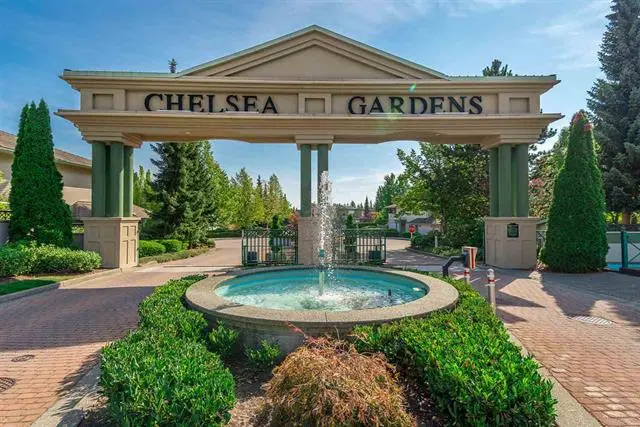
Chelsea Gardens documents 400 units, seven intercoms, 40 controlled doors and six gate controls. Tiffany Shores documents four intercoms, 23 controlled doors, two gates, two UHF readers and eight automatic-door operators. Hawthorne documents 120 units, two intercoms, 23 doors, two gates and two elevator controls.
These projects do not prove that every strata needs an integrated system. They show why counts, interfaces, resident rollout and other-trade responsibilities cannot be left as assumptions.
Frequently asked questions
Questions property teams ask
Does every BC strata security project require a 3/4 vote?+
No universal answer applies. The work, funding source, depreciation report, approved budget, bylaws and applicable Strata Property Act provisions affect the route.
Should council choose the lowest bid?+
Not automatically. Compare equipment, retained infrastructure, recurring costs, outages, resident transition, trade coordination, documentation, warranty and support.
Can a strata upgrade security in phases?+
Often, yes. The future design should still be considered so each phase can coexist and does not create another disconnected platform.
Who should own the cloud or software account?+
The strata should have documented owner-level control or a clearly transferable arrangement, including billing, recovery and vendor-access rules.
Sources & further reading
Primary references
Want advice for a specific property?
Share the existing system and the outcome you want to achieve.
Request a Site Assessment