WeTech designs, installs and upgrades CCTV and IP security-camera systems for strata buildings, apartments, parkades, retail stores, offices, warehouses and commercial properties across Vancouver and the Lower Mainland. We plan every view around the evidence the property needs, then match the camera, lens, lighting, recorder, retention and user permissions to that purpose.
A practical system starts with the site
WeTech reviews the entrances, existing equipment, wiring, user needs and management workflow before defining the final scope. The selected hardware and features are matched to the property instead of forcing every building into the same package.
What the plan can address
Purposeful camera placement
Remote viewing where approved
Night and low-light planning
Recording and retrieval workflows
Integration planning with broader security
Complete service guide
What property owners and managers should know
Remote camera awareness
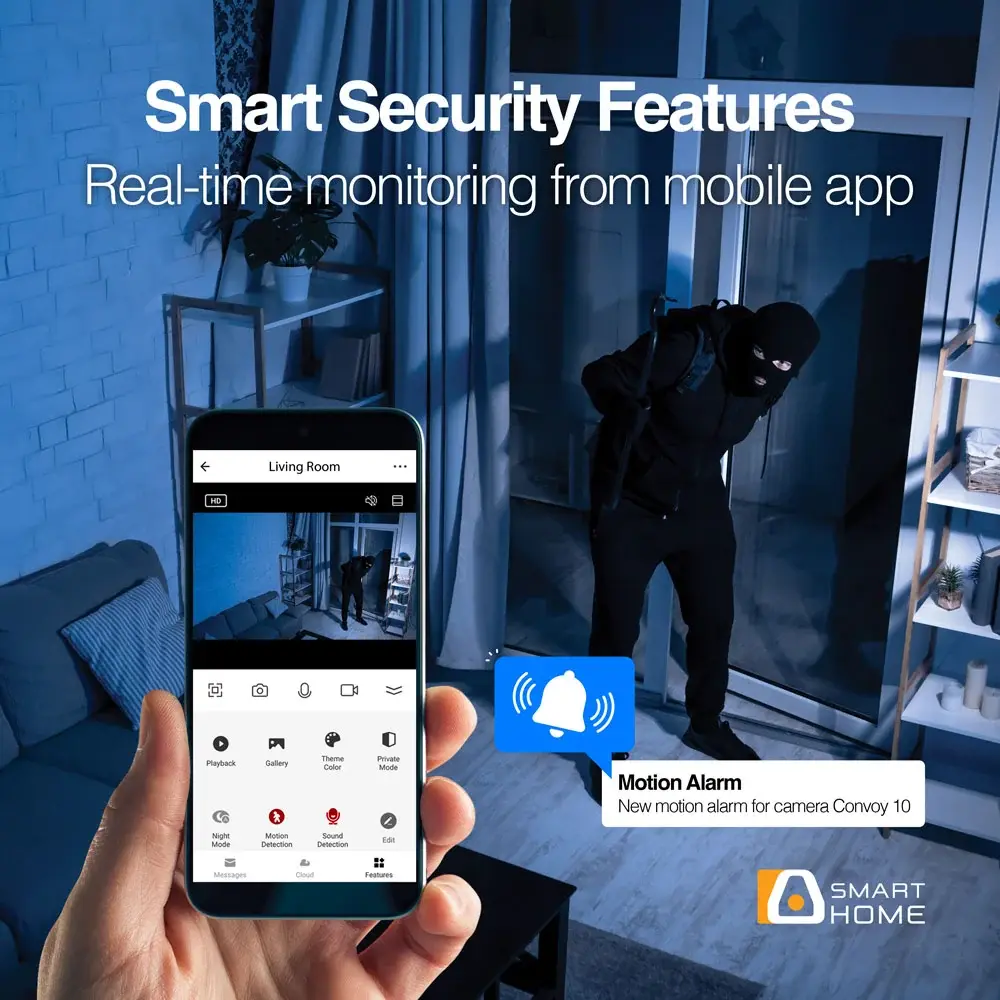
Review motion alerts with visual context.
On compatible systems, authorized users can receive configured motion or analytic alerts, open the associated camera and review live or recorded video from a mobile device. Alert behaviour depends on the camera, recorder, app, network and approved notification settings.
Configured motion or analytics notifications
Live and recorded viewing for authorized users
Site-specific privacy and retention controls
Authorized multi-user viewing
Give the right people the right level of access.
Compatible CCTV platforms can provide separate accounts for approved council members, property managers, owners or security personnel. Permissions should be limited by role, camera group and required actions instead of sharing one administrator login.
Desktop, tablet and mobile viewing where supported
Individual accounts and role-based permissions
Controlled live view, playback and export access
Night imaging options
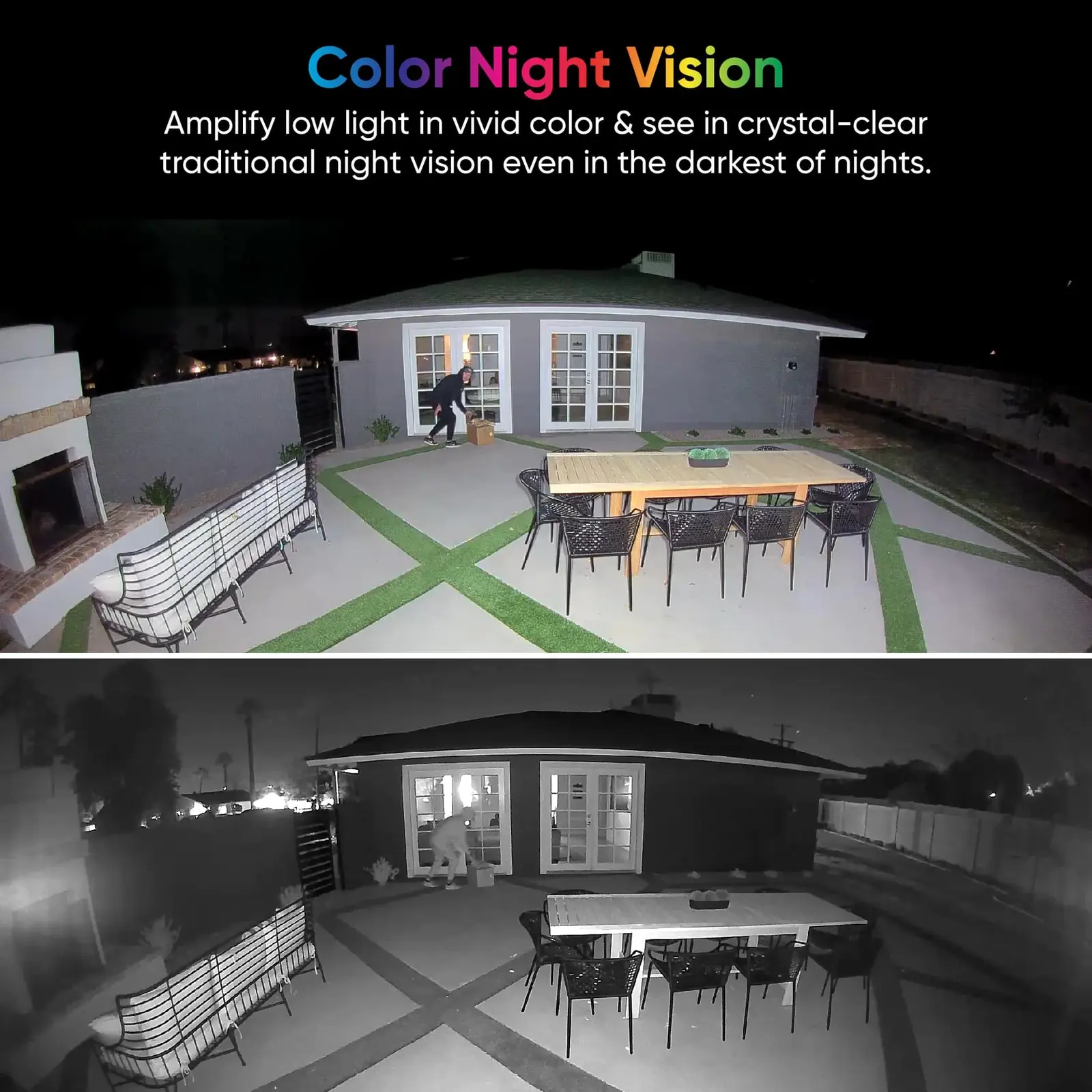
Black-and-white IR or useful colour after dark?
Traditional infrared cameras normally switch to black-and-white after dark. Compatible full-colour cameras—including ColorVu, ColorHunter and similar models—can retain useful colour day and night when the scene lighting or supplemental white light supports it.
Traditional IRClear monochrome images in darkness.
Full-colour night visionBetter colour detail for clothing, vehicles and events.
Night results depend on the selected camera, lens, available light, mounting position and configuration.
A camera system should answer a real security question
A useful design begins with risk and evidence, not a camera count. An overview camera can show the direction someone travelled; an identification camera at the correct height and distance may show a face; a purpose-built vehicle view may show make, colour and direction; and a dedicated licence-plate camera may capture a plate under controlled conditions.
We review entrances, lobbies, parkade ramps, gates, elevator areas, mail and parcel rooms, bicycle rooms, loading areas, garbage rooms, cash points, yards and exterior approaches. Each proposed view is labelled by purpose so council or management understands what the system is expected to show.
What do AI security-camera features actually do?
AI analytics help classify and search events; they do not turn a poorly placed camera into a good one. Compatible VIGI, Hikvision, Axis, Avigilon and other platforms can distinguish people and vehicles from general motion, reducing alerts caused by rain, shadows, headlights, insects or moving vegetation.
Accuracy depends on the model, scene, mounting height, lens, target size, lighting, weather and calibration. We define the required analytic first, verify that the selected hardware supports it and test the rule onsite.
Human and vehicle classification filters events by target type.
Line-crossing detection uses a virtual tripwire and can monitor one or both directions.
Intrusion or object-in-area detection watches a defined zone rather than the entire image.
Region-entering and region-exiting rules identify movement into or out of a selected area.
Time-in-area or loitering rules flag a target remaining beyond an approved threshold.
Crossline counting and occupancy analytics estimate traffic or the number of selected objects in an area.
Tailgating analytics can identify closely spaced crossings on supported Axis configurations.
Object-left or object-removed detection can support selected operational use cases.
Scene-change, video-tamper, obstruction and defocus alerts can warn when a camera view is compromised.
Abnormal-sound or audio analytics are available on selected models and require a privacy review.
Smart search, appearance search and incident review
Modern systems can shorten investigations by filtering recorded video by event, time, camera, person, vehicle, colour or other supported attributes. Avigilon Appearance Search can help follow a person or vehicle across selected cameras, while other platforms provide person and vehicle search or thumbnail-based event review.
Search results are investigative aids, not proof of identity. Export permissions, evidence naming, watermarking and an incident-handling process matter as much as the search interface.
Licence-plate recognition is a separate design task
A general parkade overview camera should not be promised to read plates. Reliable LPR or ANPR requires the correct capture distance, horizontal and vertical angle, lane width, vehicle speed, focal length, shutter speed, infrared exposure and night testing. The capture camera is often paired with a wider context camera.
Plate data may be used for searching or, on supported systems, vehicle access control. The property should document why it is collected, who can view it and how long it is retained.
Image quality after dark and in difficult entrances
We compare resolution with the factors that usually decide whether footage is useful: pixel density at the target, shutter speed, low-light performance, infrared range, full-colour night imaging, wide dynamic range, glare, reflections and moving subjects. A bright lobby behind a glass entrance may need strong WDR; a dark parkade lane may need controlled IR and a faster shutter.
Selected cameras can add a microphone, speaker, white light, strobe or recorded warning for active deterrence. Audio recording and biometric analytics should never be enabled automatically; they require a documented need and privacy review.
NVR storage, retention and remote viewing
Most commercial and strata systems record to an onsite network video recorder or video-management server. Storage is calculated from camera count, resolution, frame rate, bitrate, codec, scene complexity, continuous or event recording and the approved retention target. A storage estimate should state its assumptions rather than promise an exact number of days under every scene.
Authorized users can receive separate permissions for live view, playback, export and administration. Secure remote access can be provided through the selected platform without exposing recorder ports directly to the internet. Cloud and hybrid options can simplify multi-site management but may add subscription and bandwidth requirements.
Can an old analog CCTV system be upgraded?
Often. Existing coaxial cable may support an HD-over-coax upgrade, while tested pathways can sometimes carry IP using appropriate conversion equipment. Existing Ethernet, racks, monitors, switches and mounts may also be reusable. We test cable condition, topology, power, bandwidth, recorder compatibility and image quality before recommending reuse.
A phased migration can keep priority cameras recording while the system changes. The proposal should identify which components remain, which are replaced and where the new system creates capacity for future cameras.
Privacy planning for BC strata and commercial CCTV
Camera placement should match a legitimate, documented purpose and avoid unnecessary views into private areas or neighbouring property. Management should define authorized viewers, export rules, retention, incident requests and signage. We can support the technical design, while the property remains responsible for its policy and legal obligations.
WeTech serves Vancouver, Surrey, Burnaby, Richmond, New Westminster, Coquitlam, Langley, Delta, White Rock and surrounding Lower Mainland communities with new installations, camera additions, recorder replacements, remote-view troubleshooting and complete CCTV upgrades.
Recent Surrey project proof: VIGI and Hikvision CCTV
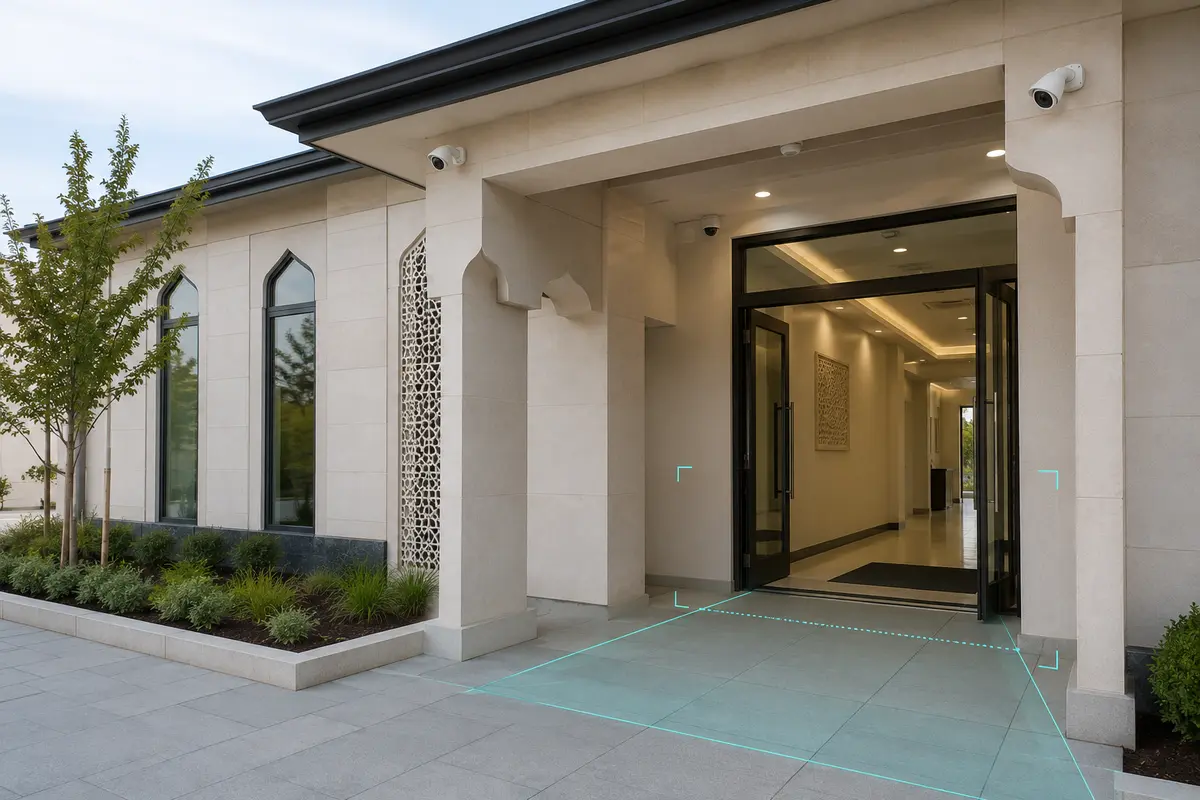
At Faizan-e-Madina Islamic Centre in Surrey, WeTech installed a 14-camera TP-Link VIGI system and configured supported AI analytics including line-crossing detection. The project demonstrates how camera placement and analytic rules can be planned together for a busy community property.
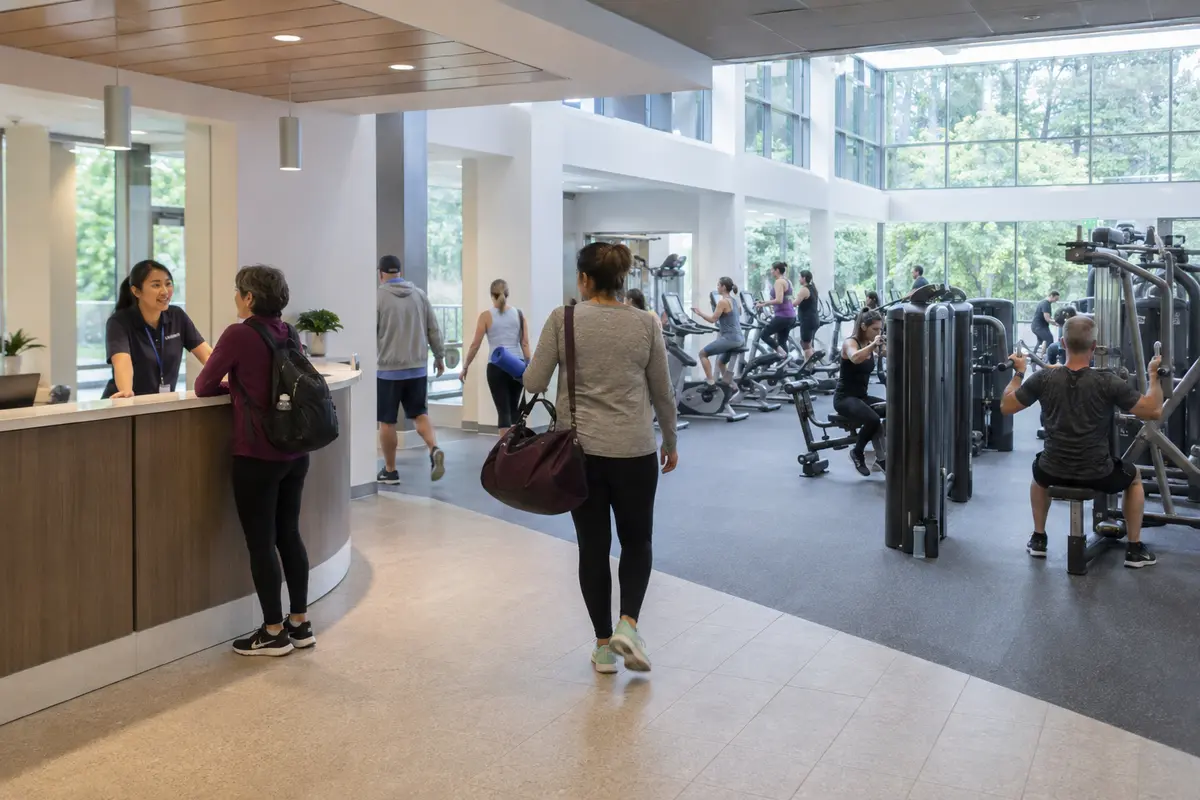
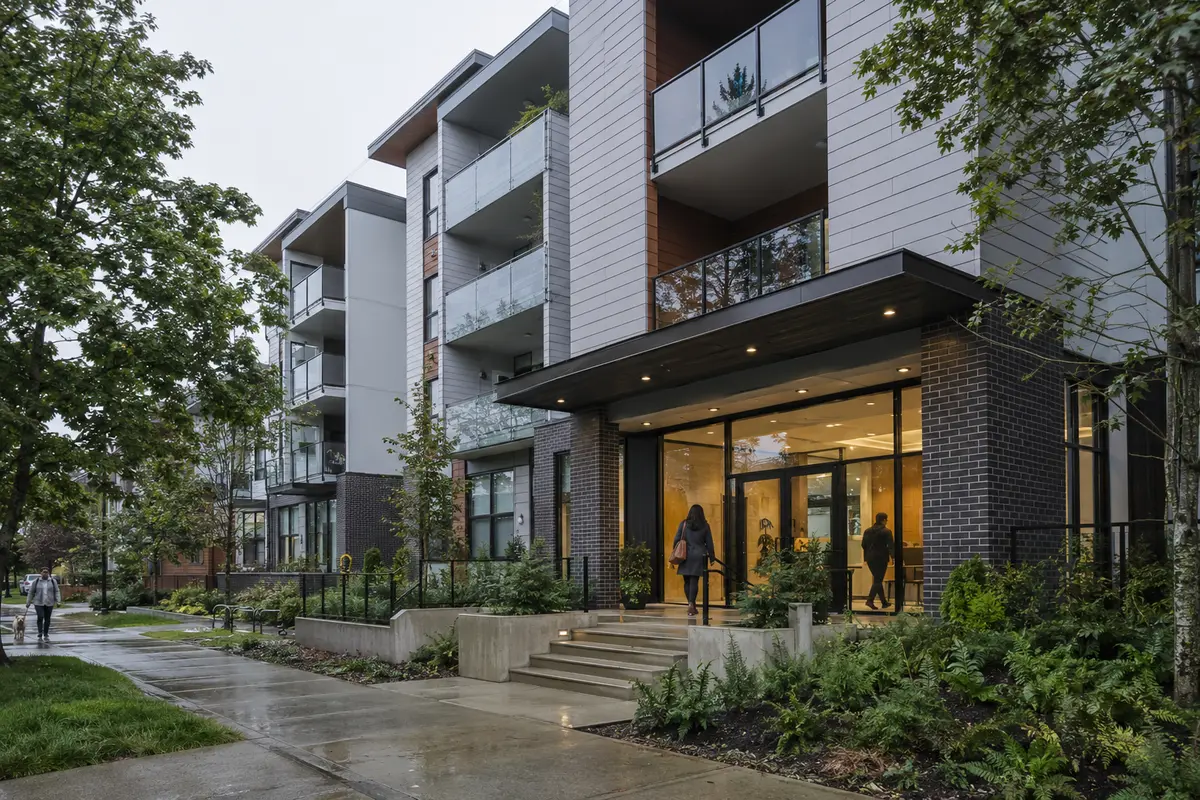
At DRIVE Basketball in Cloverdale, the Hikvision camera system was paired with an Ajax alarm for one connected security plan. WeTech also completed a Hikvision camera-system installation at Newton Park in Surrey, extending our local project record across recreation and multi-residential properties.
Systems and brands
Equipment selected for the project
We install or design around Axis Communications, Avigilon, Hikvision, Uniview (UNV), AI Base, VIGI by TP-Link, Hanwha Vision, i-PRO, Bosch, Dahua, Digital Watchdog, Pelco, GeoVision, Speco Technologies, InVid Tech, Eagle Eye Networks, Verkada and compatible ONVIF systems. Brand selection depends on cybersecurity, NDAA requirements, analytics, licensing, warranty, budget, availability and integration needs.
What is the best CCTV system for a strata building?+
The best system is the one designed for the building's risks, lighting, required evidence, retention, privacy policy and management workflow. Camera placement and recording reliability usually matter more than the highest advertised resolution.
Do AI cameras record continuously?+
They can. AI can classify alerts and make searches faster while the recorder continues to capture continuous video, scheduled video, events or a combination.
Can council or a property manager view cameras remotely?+
Yes, when secure remote access is configured and the site has suitable connectivity. Roles can limit who may view live video, play recordings, export evidence or change settings.
Can existing coaxial or Ethernet cabling be reused?+
Sometimes. We test cable condition, distance, topology, power, bandwidth and compatibility before including reuse in the design.
Will every camera read licence plates?+
No. Reliable plate capture normally needs a dedicated LPR design. A wide overview camera may record a vehicle but miss a readable plate, especially at night.
How long should a CCTV system keep video?+
The property sets a justified retention target. Required storage then depends on camera count, image settings, compression, scene activity and recording mode.
What affects the cost of an intercom, access-control or CCTV upgrade?+
Cost depends on the number and condition of entrances, devices, wiring, locks, gates, cameras and required integrations. Building size, resident transition, access methods and installation conditions also matter. A site assessment is the most reliable way to determine what can be reused and what the final scope should include.
There is no useful universal camera count. The right number depends on entrances, blind spots, lighting, required detail and the events the property needs to review. WeTech first identifies coverage objectives and then plans camera positions, lens choices and recording requirements around those objectives.
Where should CCTV cameras be placed around a building?+
Common priorities include entrances, lobbies, parkades, loading areas and other locations with a clear security purpose. Placement must consider lighting, sightlines, image detail and privacy. Cameras should be designed to answer specific operational questions rather than simply covering every possible area.
Many modern CCTV systems support secure remote viewing for authorized users. The exact access method, permissions and cybersecurity requirements depend on the selected recording platform and network configuration. WeTech establishes who needs access, what they should be allowed to view and how credentials will be managed.