WeTech installs and coordinates low-energy automatic swing-door operators for strata entrances, apartment lobbies, offices, clinics, retail spaces and accessible routes across Vancouver and the Lower Mainland. The operator is only one part of a reliable opening: the door, hinges, closer, lock, activation devices, safety sensors, access control and power must work in the correct sequence.
A practical system starts with the site
WeTech reviews the entrances, existing equipment, wiring, user needs and management workflow before defining the final scope. The selected hardware and features are matched to the property instead of forcing every building into the same package.
What the plan can address
Convenient accessible entry
Push-button and touchless options
Access-control coordination
Door-hardware assessment
Strata and commercial applications
Complete service guide
What property owners and managers should know
Accessible entry in practice
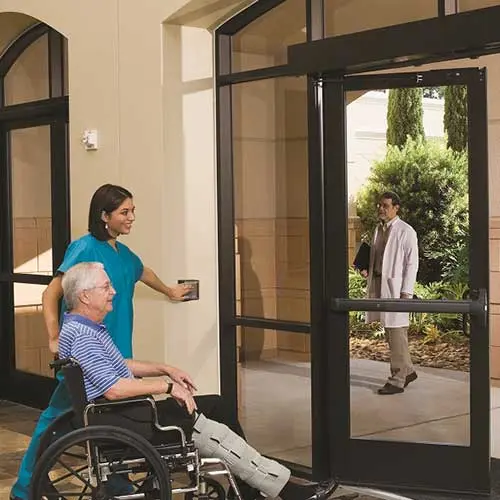
A push button should open a complete path—not create another barrier.
WeTech coordinates the automatic operator with the door hardware, activation controls and approved access system so residents, visitors and staff can use the entrance more comfortably. The final design is based on the actual door, traffic flow and site requirements.
Push-plate or touchless activation options
Coordination with fobs, intercoms and access control
Door hardware, timing and site-condition review
What an automatic swing-door system includes
Motorized operator and controller
Header, arm and mounting appropriate to the door
Large accessible push plates
Touchless wave switches
Motion or presence activation where appropriate
Safety and presence sensors
Electric strike, magnetic lock or electrified panic hardware interface
Access-control or intercom release
Door position and request-to-exit signals
120 V power and protected low-voltage wiring
Push plates, wave sensors and touchless entry
A large push plate gives a clear, accessible activation target. A wave sensor can reduce contact in clinics, washrooms and high-use entrances. Motion activation can suit some public doors but may create unwanted opening at secure strata entrances, so it is selected carefully.
Activation height, approach space, visibility and door timing are reviewed for the intended users rather than treating the button as a decorative accessory.
How access control and the door operator work together
At a secured entrance, the lock must release before the operator applies opening force. The controller then opens the door, holds it for the approved time and allows it to close and latch. If the lock does not release, the operator should not repeatedly push against a locked door.
A fob, mobile credential, BLE, NFC, Apple Wallet credential or approved intercom release can start the sequence. The same logic can support an accessible visitor entry after the resident answers a video call.
Door condition determines operator reliability
An operator cannot correct a binding door, worn hinge, misaligned frame, damaged threshold or unsuitable panic device. We review door weight, width, swing, wind exposure, hinges or pivots, closer, latch, seals and frame stability before selecting equipment.
When the door opens but will not latch consistently, the cause may be alignment, pressure, closer or locking hardware rather than the motor. A proper service visit diagnoses the complete opening.
Safety and presence sensing
Sensors may monitor the opening and closing path and help prevent unwanted movement when a person or object is in a protected area. The selected operator mode, speed, force, hold-open time and activation method must match the opening's standards and use.
We test normal traffic, slow users, mobility devices, carts, door reactivation, loss of power and the required manual operation. Final compliance depends on the complete installed opening and applicable authority requirements.
Automatic doors for strata and multi-residential buildings
Common applications include the main entrance, vestibule doors, parkade lobbies, amenity routes and accessible washrooms. Strata projects must balance accessible operation with security, tailgating risk, weather, noise and resident traffic.
The BC Building Code now includes broader power-door-operator requirements in some accessible routes and common spaces. Project-specific obligations should be confirmed with the authority having jurisdiction and the responsible design professional.
Accessible washroom door systems
A barrier-free washroom can coordinate an exterior push plate or wave sensor, automatic opening, lock control, occupancy status and an interior exit input. The sequence must make the occupied state clear, preserve emergency release and prevent the operator from fighting the lock.
Washroom layouts and code obligations vary, so the operator is planned with the architect, contractor or authority requirements where applicable.
New installation, retrofit, repair and maintenance
A retrofit may reuse a suitable door and frame while adding the operator, power, activation and security interfaces. Repairs can address activation, timing, sensors, wiring, lock sequencing and controller faults, while mechanical door or structural work may require a door specialist.
Preventive inspection helps identify loose arms, binding doors, worn hardware, damaged activation devices and changing latch performance before the entrance fails.
Vancouver project proof: Sina Pharmacy
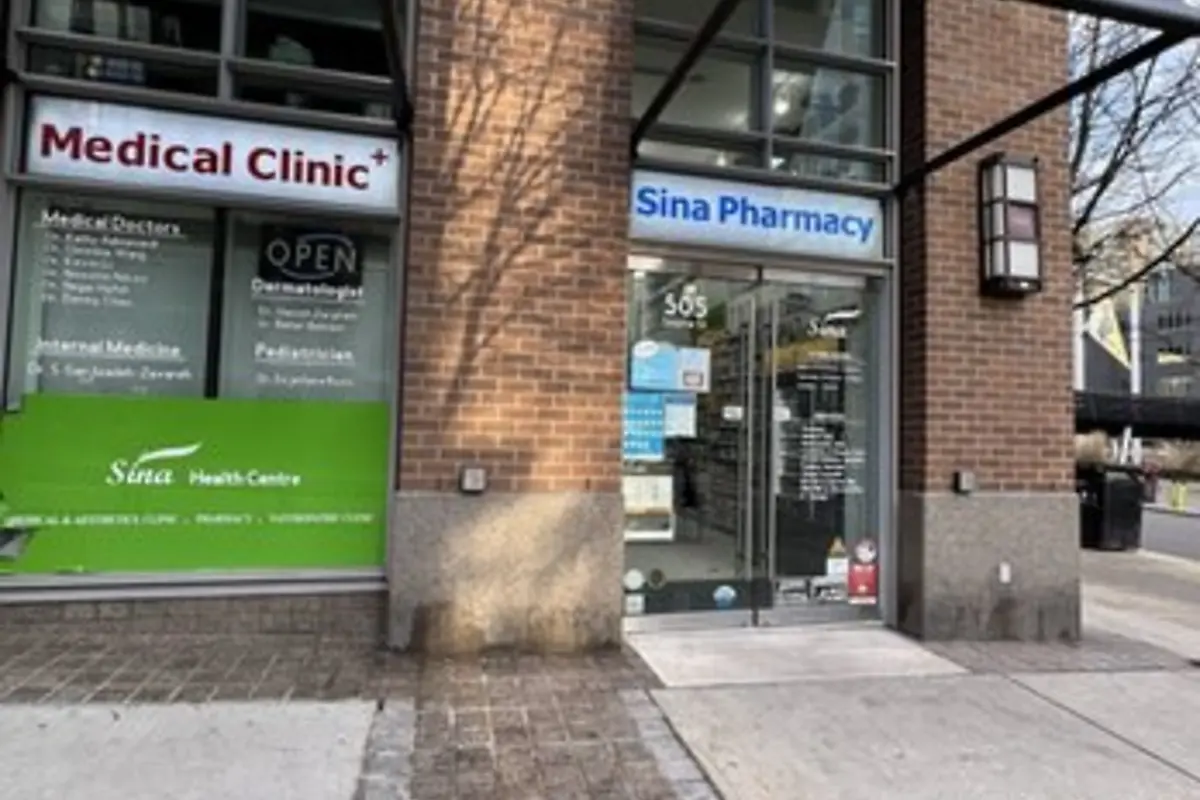
WeTech installed an automatic door operator at Sina Pharmacy in downtown Vancouver. The completed commercial-healthcare entrance project adds real local proof behind our Vancouver automatic-door service.
Pharmacies and clinics need an entrance plan that considers customer traffic, accessibility, existing door hardware and secure closing. The exact activation and safety configuration is selected from the conditions at each opening rather than copied from another site.
Automatic-door brands and project selection
We select equipment for door weight, duty cycle, available header space, push or pull mounting, wind, required integrations, parts support and serviceability—not simply the lowest operator price. WeTech serves Vancouver, Surrey, Burnaby, Richmond, New Westminster, Coquitlam, Langley, Delta and White Rock.
Systems and brands
Equipment selected for the project
We install, integrate or assess dormakaba, Ditec/Entrematic, record, Stanley Access Technologies, Horton Automatics, ASSA ABLOY, Besam, NABCO, Tormax, Allegion/LCN, Norton, Camden, BEA, OPTEX, MS Sedco, RCI, SDC and compatible low-energy automatic-door components.
Yes. Access control can release the lock and then activate the operator in a tested sequence.
Can a push button be added to an existing door?+
Often, if the door, frame, hinges, closer, latch, power and available mounting support a suitable operator.
Why does an automatic door open but fail to latch?+
Possible causes include door alignment, wind or pressure, closer settings, hinges, latch position, lock timing or operator setup. The complete opening must be checked.
Are touchless wave sensors available?+
Yes. Wave sensors are useful where touchless activation is preferred, but their location and detection range must be commissioned carefully.
Does every strata entrance require an automatic operator?+
Requirements depend on the building, route, alteration scope and applicable code. The authority having jurisdiction or responsible design professional confirms project-specific obligations.
Can the door still be opened manually during an outage?+
Low-energy swing doors are generally planned for manual operation, but the exact force, locking and emergency behaviour depend on the approved opening and must be tested.
WeTech installs video intercoms, access control, CCTV, alarm systems, gate and parkade access, elevator access control and automatic door operators. We work with strata, apartment, multi-residential and commercial properties. The right combination depends on the building, existing infrastructure and the people who need to use and manage the system.
How do we know which security systems our property needs?+
Start with the problems you are trying to solve—not a product list. A site assessment reviews entrances, visitor flow, existing wiring, keys or fobs, cameras, gates and management needs. WeTech then identifies whether intercom, access control, CCTV, alarms or an integrated combination is appropriate for the property.
What happens during a building security site assessment?+
We review the property’s entrances, existing equipment, wiring, user groups and management requirements. We also discuss what is working, what is failing and what residents or staff need from the upgrade. The result is a practical set of options, important limitations and a clearer scope for proposal and budgeting.
Can a building security upgrade be completed in phases?+
Often, yes. A phased approach can begin with the highest-priority entrances or the system that is creating the most risk. The design should still consider future doors, gates, elevators and management needs from the beginning so each phase supports the larger plan instead of creating another disconnected system.