
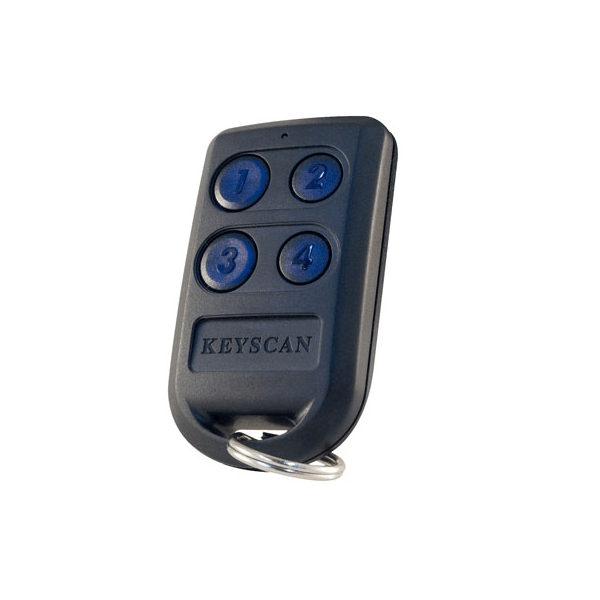
A replacement piece of plastic does not remove the missing credential from the system. Safe response depends on identifying, revoking, testing and recording the exact credential under the building’s authorized process.
Direct answer
The short answer
If a condo fob is lost, report it immediately and have the exact credential deactivated before issuing a replacement. The administrator should verify that the old identifier is denied at every relevant reader and issue a new unique credential. If copying is suspected, compare authorized event logs with permitted camera evidence, check for sharing or database errors, identify the credential technology and decide whether operational cleanup or a phased security upgrade is needed.
What a resident should do immediately
If mechanical keys or identifying documents were lost with the fob, tell management; disabling an electronic credential does not disable a physical key.
- Contact the authorized strata, landlord or property manager
- Provide your name, unit, credential description and when it was last seen
- Explain whether keys or information identifying the property were also lost
- Ask management to deactivate the exact credential
- Obtain a new credential through the approved process
- Do not post the identifier publicly or make an unauthorized copy
Administrator response checklist
Do not disable a similar-looking fob by guesswork. Verify the requester and the database record first.
| Step | Required action |
|---|---|
| Verify | Confirm requester identity and authority |
| Identify | Locate the exact database record |
| Revoke | Disable the lost identifier under the approved policy |
| Test | Confirm the old identifier is denied at affected readers |
| Replace | Enroll a new unique credential |
| Restrict | Apply only approved doors, floors, gates and schedules |
| Record | Keep a minimal incident and replacement record |
| Review | Check for shared credentials, database errors or legacy risk |
Lost, copied, shared and faulty are different
An event log shows that an identifier was presented. It does not, by itself, prove who physically carried the fob.
| Situation | What it means | Main response |
|---|---|---|
| Lost | The resident no longer controls the original | Disable that identifier and issue a new one |
| Authorized duplicate | A separate approved credential with its own identifier | Manage it independently |
| Copied identifier | Two devices may present the same identifier | Disabling it may stop both |
| Shared fob | One legitimate credential passes between people | Logs still show only that credential |
| Database error | Wrong unit, person or access group | Correct records and provisioning |
| Reader fault | One opening rejects or misreads credentials | Diagnose reader, wiring and controller path |
Can every condo fob be cloned?
No. Risk varies. Legacy 125 kHz proximity credentials generally offer weaker protection against copying than modern cryptographic credentials. Modern secure credentials can use encryption and mutual authentication, but reader configuration, key management, fallback modes and reader-to-controller communication still matter.
No technology should be advertised as impossible to clone. A responsible claim is that a correctly configured modern credential can substantially reduce copying risk.
Audit the complete credential chain
The housing is only one layer. A secure migration reviews how data travels from credential to the opening.
| Layer | Question |
|---|---|
| Credential | Legacy proximity, UID-only, encrypted smart card, mobile or another technology? |
| Reader | Does it authenticate protected data or read only a repeatable identifier? |
| Reader to controller | Legacy Wiegand or properly configured OSDP Secure Channel? |
| Controller | Can one credential be revoked, scheduled and limited by door? |
| Database | Are credentials unique and accurately assigned? |
| Administration | Are accounts named, protected and current? |
| Opening | Does the door latch and report configured held or forced events? |
Investigate a suspected copy responsibly
Look for patterns: the same identifier at incompatible locations, continued events after revocation, duplicate enrolment, one faulty reader, wrong clocks or door names, shared use, or an insecure legacy mode left active. Compare permitted footage only under the property’s privacy policy and do not accuse a resident from one unexplained event.
When to consider a credential upgrade
A system review is reasonable when the property relies on legacy technology, cannot account for active credentials, fails to revoke move-outs, keeps insecure fallback after a partial migration, lacks database ownership or operates unsupported controllers and software.
| Option | Best use | Limitation |
|---|---|---|
| Database cleanup | Hardware is serviceable but records are wrong | Does not change credential technology |
| Unique reissue | Unknown copies and identifiers must be removed | Requires resident coordination |
| Dual-technology migration | Phased transition is needed | Legacy risk remains until retired |
| Encrypted smart credentials | Reduce copying risk | Keys and readers must be configured correctly |
| Mobile credentials | Fast issuance and revocation | Phone support and fees vary |
| OSDP Secure Channel | Protect reader-controller communication | Needs compatible, configured devices |
Frequently asked questions
Questions property teams ask
Can a lost fob be disabled without affecting everyone?+
Yes, when it has a unique enrolled identifier. Other residents remain active while that credential is revoked.
Can management disable a clone but keep the original?+
Not always. If both present the same identifier, the system may see them as one credential and revocation may stop both.
Can access logs prove who used a fob?+
No. Logs identify the credential presented, not necessarily the person carrying it.
Do we need to rekey the whole building after one fob is lost?+
Normally an individually managed electronic credential can be disabled. Mechanical keys attached to it require a separate risk assessment.
How much can a building charge for a replacement fob?+
There is no universal amount for every relationship. Tenant access-device rules can differ from a strata charge to an owner, and the reason for replacement matters. Confirm the applicable tenancy agreement, strata bylaws and current legal requirements rather than relying on a generic price.
Sources & further reading
Primary references
Want advice for a specific property?
Share the existing system and the outcome you want to achieve.
Request a Site Assessment